
Non-Monogamy 101: Honest Talk About Open Relationships
Open relationships, explained without hype or judgment: what ENM and polyamory really mean, the agreements that work, and how to handle jealousy.
There’s a specific kind of grief that hits around 9:40 on a Tuesday night, when you realize the group chat that once pinged forty times an hour has gone quiet for three days, and the last message was a meme nobody reacted to. These are the same people who held your hand through a breakup, drove you to a 6 a.m. flight, and once staged a low-key intervention about a situationship that was very obviously going nowhere. Your chosen family. The people who chose you back. And now everyone is just… busy.
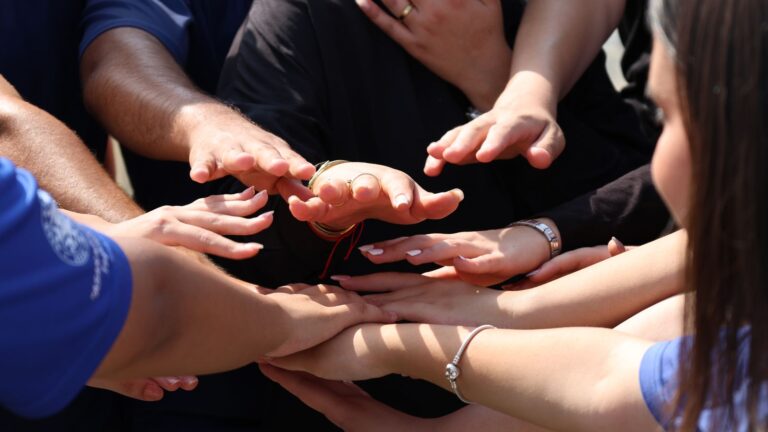
If you’re queer, you probably know the term in your bones, even if you’ve never said it out loud. Chosen family is the network of people who become your family because you decided they would — friends, exes who stayed, a former roommate, the older lesbian couple two doors down who feed you when you’re sad. For a lot of LGBTQ people, it isn’t a cute supplement to the family you were born into. Sometimes it’s the whole thing.
The problem nobody warns you about is that found family requires maintenance, and adulthood is a relentless machine for eroding it. Jobs, partners, mortgages, kids, time zones, burnout. The bonds don’t dissolve because anyone stopped caring. They thin out because nobody scheduled the caring. This is a piece about why that’s worth fighting, and how to actually do it without turning friendship into a second job.
Let’s be clear about the stakes, because “friends are important” is the kind of greeting-card sentiment that lets everyone off the hook. For many LGBTQ people, a chosen family does the structural work that a family of origin is supposed to do and sometimes doesn’t. It’s the emergency contact. The person who knows your meds. The one who shows up at the hospital and gets told they’re “not really family” by someone with a clipboard.
Researchers have been documenting this for decades. Advocacy and research organizations that focus on LGBTQ older adults, including SAGE, have long found that queer people are more likely than their straight, cisgender peers to lean on friends and partners — rather than biological relatives — for caregiving and day-to-day support. Family rejection, the legacy of decades without legal recognition for same-sex relationships, and plain geography all push in the same direction. The Diverse Elders Coalition has called these families of choice exactly that: priceless, and load-bearing.
That’s the part that makes the slow fade so quietly dangerous. When the broader culture already treats your most important relationships as optional, letting them lapse isn’t just sad — it can leave you genuinely unsupported in the moments that matter most. An LGBTQ support network is not a luxury you maintain when you have spare time. It’s infrastructure.
Here’s the reframe that helps: most chosen family drift-apart isn’t a referendum on how much people love each other. It’s logistics colliding with the way modern life is built. In your twenties, proximity did the heavy lifting — shared apartments, the same bar, broke schedules that all bottomed out at the same time. Then the scaffolding that used to throw you together every week gets dismantled, one promotion and one move at a time.
Texting back is supposed to be the thing that bridges the gap, and it is genuinely terrible at it. A text is a tiny obligation that’s easy to defer and even easier to feel guilty about. We mistake the silence for indifference when it’s usually just executive dysfunction wearing a trench coat. The cure is rarely “try harder at replying.” It’s building structures that don’t depend on anyone’s willpower at 9:40 on a Tuesday.
The goal isn’t more contact. It’s less friction. You want rituals that run on autopilot, low-stakes ways back in after a lapse, and a clear sense of who your inner ring actually is. Concrete tactics that hold up under real adult chaos:
Notice what’s missing from that list: any demand that everyone become a better, more responsive, more emotionally available person overnight. People are who they are. Good systems work with that instead of against it.
If a once-close bond has gone silent and the guilt has hardened into avoidance, skip the paragraph-long apology — it puts pressure on both of you and invites a performance of forgiveness nobody wants to do over text. Send something specific and low-stakes instead. A photo that reminded you of them. A “saw this and thought of you” with a link. An actual invitation with a date attached.
The fastest way to revive a friendship is to give it somewhere to be, not something to process. And if you’re the one who went quiet, remember that the people who chose you are usually relieved, not resentful, to hear from you. The story where they’re secretly furious is almost always fan fiction your anxiety wrote.
One trap worth naming: the moment a serious relationship arrives, it’s tempting to fold your entire social life into your partner and call it efficiency. It feels cozy. It’s also how people wake up at 40 with one emergency contact and a lot of acquaintances. A partner is not a replacement for an LGBTQ support network — they’re a member of it. Protect a couple of friendships that are yours, not the couple’s. Future you, and frankly future them, will be grateful.
Somewhere along the way we absorbed the idea that real friendship should be effortless, that if you have to schedule it, it doesn’t count. That’s romance-novel logic, and it has quietly wrecked more chosen families than any falling-out ever did. The grand gestures — the airport pickups, the 2 a.m. crises — are real, but they’re not what keeps the thing alive. The boring recurring dinner is.
Chosen family is, by definition, a thing you keep choosing. Not once, dramatically, in your early twenties when you found your people. Over and over, in small unglamorous increments, including on the Tuesdays when everyone’s too tired and the group chat’s gone dark. The choosing is the love. So text first. Book the table. Be the hub. The people who chose you are worth the calendar invite.
Chosen family refers to the close, family-like relationships people build intentionally rather than inherit by blood or law — friends, partners, exes, mentors, and neighbors who provide real emotional and practical support. The term has deep roots in LGBTQ communities, where many people have created these networks in response to family rejection or distance. It describes kin you choose and who choose you back.
Research from organizations focused on LGBTQ aging, including SAGE, indicates that queer people are more likely than straight, cisgender peers to rely on friends and partners for caregiving and support rather than biological relatives. Family estrangement, decades without legal relationship recognition, and geographic distance all contribute. For many, chosen family is the primary safety net, not a supplement to one.
Lead with low-stakes specifics rather than a heavy apology. Send a photo, a relevant link, or a concrete invitation with an actual date. Giving the friendship a place to land works far better than asking it to process months of silence. Most people are relieved to hear from you, not keeping score.
Completely. The shared proximity and overlapping schedules that bonded people in their twenties tend to disappear with jobs, partners, moves, and caregiving. The drift is usually structural, not emotional. The fix is building recurring, low-friction rituals so connection no longer depends on anyone remembering to reach out at the end of an exhausting day.
No, and trying is risky. A partner should be one member of your support network, not the entire thing. Folding your whole social life into a relationship leaves you fragile if that relationship ends and isolates your partner too. Keep a few friendships that are yours alone; a wider web makes everyone more resilient.
Keep reading: showing up for LGBTQ spaces the right way.
Open relationships, explained without hype or judgment: what ENM and polyamory really mean, the agreements that work, and how to handle jealousy.

Same-sex marriage worldwide in 2026: nearly 40 countries say yes, dozens still criminalize. See where it’s legal, what’s new, and what’s contested.

Situationships, soft launching, breadcrumbing, the talking stage: a witty, accurate guide to modern dating terms through a queer lens. Decode it here.
Demon twinks, haunted hookups and costumes that require zero effort.
Tees from $29.99.