
Non-Monogamy 101: Honest Talk About Open Relationships
Open relationships, explained without hype or judgment: what ENM and polyamory really mean, the agreements that work, and how to handle jealousy.
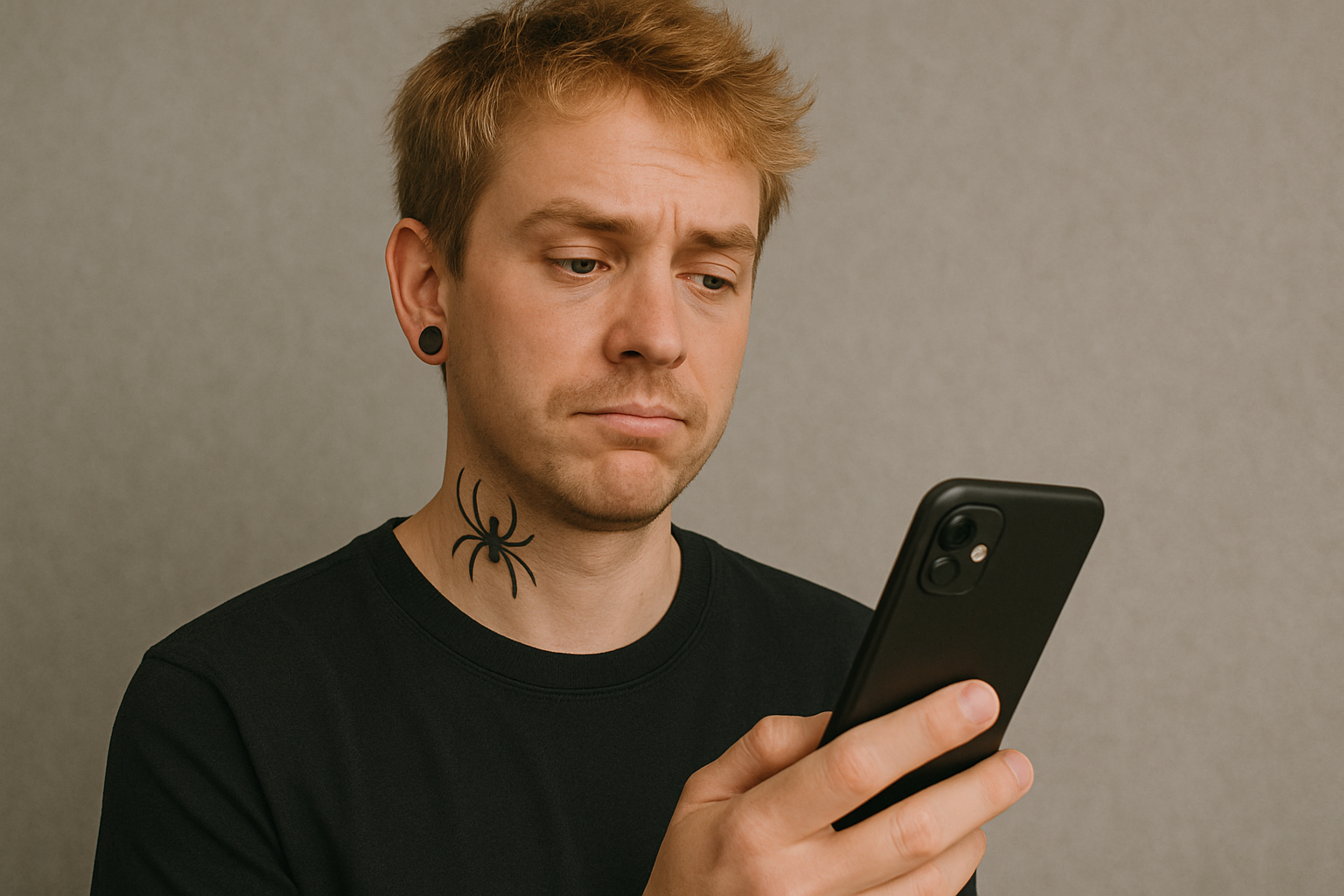
There is a very specific flavor of rage reserved for the moment your phone finally lights up at 1 a.m.—right after you have given up on hookups entirely, washed your face, and resigned yourself to a night of snacks and reruns. Suddenly it is raining “you up?” texts. Where was this energy two hours ago, when you were freshly showered, optimistically moisturized, and perched on the edge of the bed like a hopeful little rotisserie chicken? If you have ever screamed “WHY NOW?” into the void of Grindr or Scruff, congratulations: you have discovered the cosmic conspiracy of hookups, and the good news is that it is not actually personal. It is psychology, and it is gloriously predictable once you know the trick.
This post is half therapy session, half field guide. We are going to laugh about the cruel comedy of hookup timing, and then we are going to explain the genuine behavioral science underneath it—because the moment you understand why everyone gets interested the second you stop caring, the whole maddening cycle becomes a little less maddening. Slightly. We are not miracle workers.
You know the ritual. You decide tonight is the night. You shave the parts that get shaved, scrub the parts that get scrubbed, light a candle you bought specifically for occasions like this, and queue up a playlist with the lighting to match. You craft an opener with the precision of a sommelier. You hit send. And then?
Crickets. Digital tumbleweeds. The grid is full of green dots—everyone is online—and yet nobody, not a single soul, is interested in you in this particular moment. You could send the wittiest, most charming message ever typed and still get left on read like a parking ticket nobody wants to acknowledge. The irony of hookups is iron-clad: the harder you chase, the more they scatter. Effort, in this economy, appears to be a repellent.
So you do what any self-respecting person does after an evening of effort and zero return. You tap out. You turn off the mood lighting, blow out the candle, swap the going-out fit for the most defeated hoodie you own, and emotionally surrender to a show you have seen seventeen times. The night is over. You have made peace with it. You have moved on.
And that is precisely when it happens.
The phone erupts like a Vegas slot machine paying out at the worst possible moment. “Hey, still up?” “Wanna come over?” “Can you host?” And it is never just one person—it is four, five, an entire flash mob of suitors who have collectively decided that now, in your sweatpants, mid-spiral, is the appropriate time to materialize. You were dressed to kill an hour ago and got nothing. You look like a tired raccoon now and apparently you are irresistible. Make it make sense.
It feels like a glitch in the matrix. A gay Bermuda Triangle of horny timing where availability and demand can never, ever occupy the same calendar slot. But it is not a glitch. It is a feature of how attraction and attention actually work—and there are at least three forces conspiring against your timing.
When you are online, eager, and clearly available, you read as easy to get—and the brain has an annoying habit of valuing things in inverse proportion to how easily it can have them. This is the scarcity principle, and decades of social psychology back it up. The classic “playing hard to get” research suggests people are often most drawn to a target who is selectively choosy rather than universally available. So when you log off, stop replying, and emit that unmistakable “I have given up” energy, you accidentally signal scarcity. You went from “in stock” to “limited edition,” and the bidding war begins.
Your slot-machine metaphor is more accurate than you intended. Hookup apps run on a variable-ratio reinforcement schedule—the same psychological mechanism that makes gambling so sticky. Rewards (a hot match, a “you up?”, a genuinely good conversation) arrive unpredictably, which is exactly the pattern that hooks the brain hardest. You keep checking, swiping, and coming back precisely because you never know when the jackpot will hit. The unpredictability is not a bug you can outsmart; it is the entire design, and it ensures the pings always seem to land when you least expect them.
There is also a real shift in your behavior the moment you give up. Hyper-eager messaging—triple texts, instant replies, an opener that reads like a hostage negotiation—can register as pressure, and pressure is not sexy. Once you disengage, your remaining messages get shorter, breezier, and lower-stakes, which paradoxically reads as confidence. You are not trying anymore, and “not trying” is one of the most attractive postures in the entire dating ecosystem. The universe did not change. Your energy did, and people can smell it through the screen.
Knowing the mechanism does not entirely take the sting out, because the timing feels like spiritual bullying. The cruelest part is the predictability—you can practically set a watch by it. You have probably even caught yourself thinking, “If I want people to message me, I should just stop wanting it.” That is essentially sex rain-dancing: perform indifference, and the sky opens. It works, and it is infuriating, because the offers arrive at the one moment you are no longer in the mood to accept them.
And do not even start on the days you genuinely cannot meet up—the days with a deadline, an early meeting, a cold, a roommate situation, whatever. Those are, without fail, the days the grid decides to fall in love with you. Everyone wants to “cuddle and stay up all night” on the exact evening you have a 7 a.m. call. The drought and the monsoon are never on speaking terms, and your calendar is the casualty.
If you would like to stop being a victim of your own thirst, here is the field guide—part behavioral science, part hard-won pettiness:
Here is where I have landed. When the pings arrive after I have already mentally clocked out, it does not feel sexy—it feels like being noticed by someone who ignored me when I was dressed to the nines, then circled back the instant I changed into sweatpants. I had the candle. I had the playlist. I had the whole mood assembled and ready to go, and you waited until I was halfway into a hoodie and a rerun to slide in with a single “yo.” Respectfully: no.
So consider this my new policy. The chaos of hookup timing is not going to disappear—it is baked into the psychology of scarcity, the slot-machine math of the apps, and the universal law that everyone wants you most when you want it least. But I refuse to keep re-lubing my entire evening on someone else’s schedule. If I have already moved on and you surface afterward, you are paying a metaphorical late fee. You missed your window. Try again next week, when I am once again freshly moisturized and foolishly optimistic—and watch yourself vanish all over again, right on cosmic schedule.
Mostly because giving up changes your behavior and your perceived availability. You go from eager and “in stock” to unbothered and scarce, which the scarcity principle says makes you more appealing. Your messages also get breezier and lower-pressure once you stop trying, and low pressure reads as confidence. The timing feels supernatural, but it is really just psychology catching up to your changed energy.
To a degree, yes. Research on the scarcity principle and selective availability suggests people are often most attracted to someone who is choosy rather than universally available to everyone. The nuance is that pure unavailability can also read as rejection, so the sweet spot is being genuinely interested in them while clearly not desperate in general.
Because they run on a variable-ratio reinforcement schedule—the same unpredictable-reward pattern that powers slot machines. You never know which swipe or refresh will deliver a match or a message, and intermittent, unpredictable rewards are the most habit-forming kind. That is why the pings always seem to arrive at random, inconvenient moments and why it is so hard to put the phone down.
Set a realistic availability window and communicate it casually, then stop compulsively refreshing the app—muting notifications genuinely helps. Lead with low-effort, confident messages from the start instead of waiting until you have “given up” to relax. And accept that you cannot fully control other people’s timing; you can only control how much of your evening you stake on it.
Completely. Rejection and being ignored activate real emotional responses, and the on-again-off-again rhythm of apps amplifies them. Naming the pattern and finding the humor in it—as opposed to taking every non-reply as a verdict on your worth—is genuinely one of the healthiest ways to ride the rollercoaster without letting it ruin your night.
Keep reading: the new grammar of queer dating.
Open relationships, explained without hype or judgment: what ENM and polyamory really mean, the agreements that work, and how to handle jealousy.

Same-sex marriage worldwide in 2026: nearly 40 countries say yes, dozens still criminalize. See where it’s legal, what’s new, and what’s contested.

Situationships, soft launching, breadcrumbing, the talking stage: a witty, accurate guide to modern dating terms through a queer lens. Decode it here.
Demon twinks, haunted hookups and costumes that require zero effort.
Tees from $29.99.