
Same-Sex Marriage Worldwide: A 2026 Map of Progress and Pushback
Same-sex marriage worldwide in 2026: nearly 40 countries say yes, dozens still criminalize. See where it’s legal, what’s new, and what’s contested.
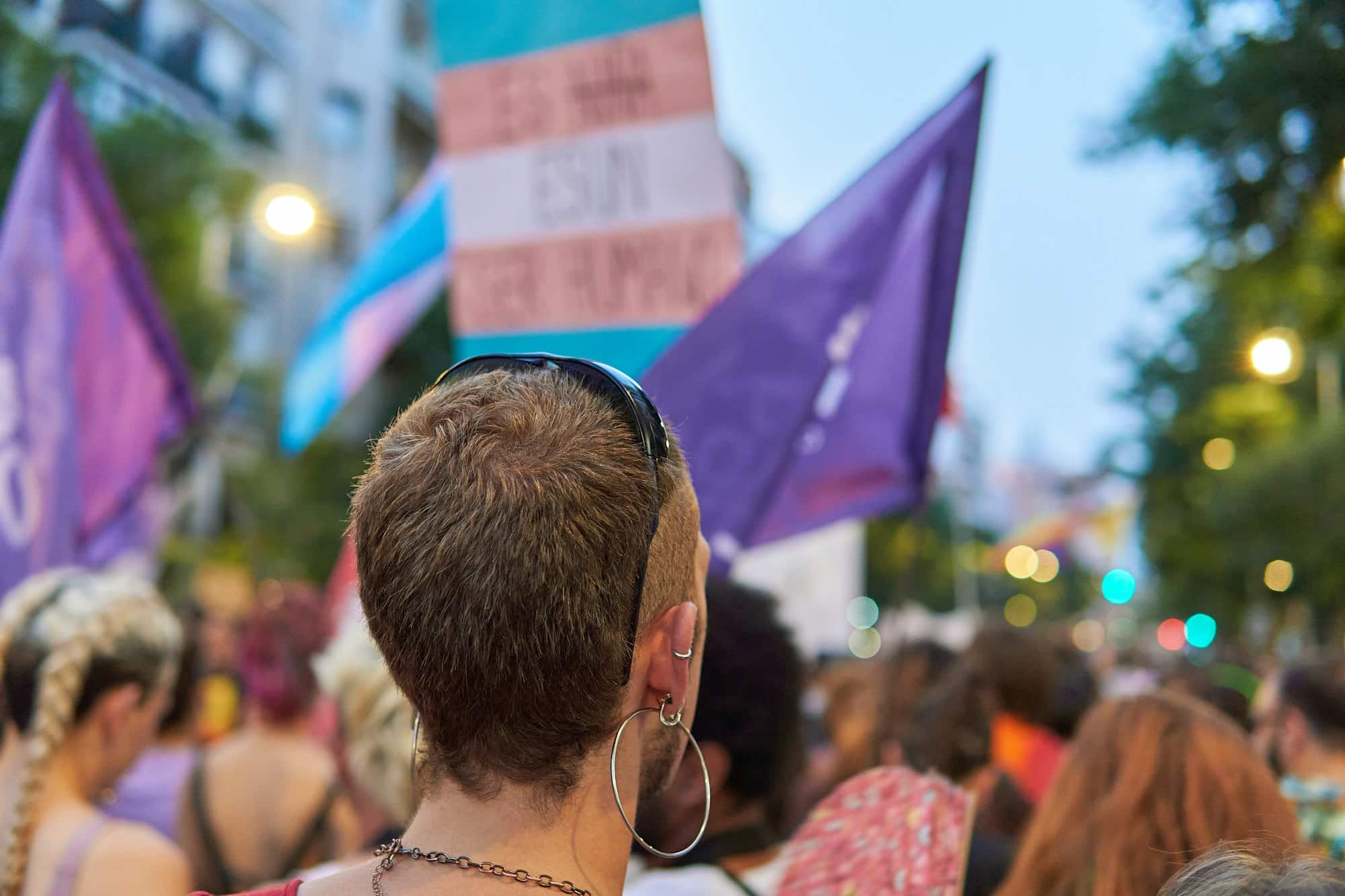
Trans inclusivity is not a side quest for the LGBTQ+ movement. It is the movement. At Angry Gay Designs, we put loud, unapologetic statements on shirts, but the loudest statement any of us can make is simple: trans people belong here, fully and without an asterisk. The “T” has been in the acronym since the beginning, yet trans folks still carry a disproportionate share of the danger, the legislation, and the exhaustion. Embracing trans inclusivity means moving past the rainbow-logo-in-June reflex and asking a harder question every other month of the year. Are the trans people in our lives, our workplaces, and our scenes actually safer, seen, and celebrated because we showed up?
Inclusivity gets watered down fast. It becomes a poster in a break room, a pronoun line in an email signature, a one-time donation, and then everyone goes back to autopilot. Real trans inclusivity is the difference between tolerating someone in a room and building the room so they never had to fight to enter it.
It is worth getting the language right, because language is where a lot of well-meaning people stumble. “Transgender” is an adjective, not a noun and not a verb. A person is a transgender woman or a transgender man or a nonbinary person; nobody is “a transgender” or “transgendered.” GLAAD’s media guidance also makes a small but mighty point: say “pronouns,” not “preferred pronouns,” because a person’s pronouns are not a preference any more than yours are. And gender identity is not something a trans person “identifies as” the way you might identify as a morning person. They simply are who they are. Get these small things right and the bigger things get easier.
If you need reasons beyond basic human decency, there are plenty, and they are not abstract. Trans inclusivity is a response to measurable harm.
The LGBTQ+ community contains multitudes, and trans people frequently sit at the crossroads of several overlapping pressures at once. A trans person who is also Black, disabled, undocumented, or low-income faces a stacked deck that a cisgender, white, employed gay man simply does not. Trans inclusivity means we design our advocacy, our events, and our spaces around the people facing the steepest climb, rather than the people already closest to the exit. When the most marginalized are safe, everyone is safer.
This is the hardest part to write and the most important to read. According to the Human Rights Campaign, which has tracked fatal violence against transgender and gender-nonconforming people since 2013, the deadliest single year on record was 2021, when at least 57 trans and gender-nonconforming people were violently killed in the United States. Across the roughly 400 cases HRC has documented over a decade, the pattern is stark: the majority of victims were Black, and a large share were Black trans women specifically. Many killings go unreported, misreported, or buried under a victim’s deadname, which means the real numbers are almost certainly higher. Creating trans-inclusive environments is not a feel-good gesture in the face of this. It is harm reduction.
The mental health gap trans people face is not a feature of being trans. It is a feature of being rejected. The Trevor Project’s 2024 national survey of more than 18,000 LGBTQ+ young people found that 46% of transgender and nonbinary respondents had seriously considered suicide in the past year. The same research found the antidote hiding in plain sight: young trans people who had their pronouns respected at home, access to gender-affirming clothing, and gender-neutral bathrooms at school reported lower rates of attempting suicide than those who did not. The takeaway is almost unbearably simple. The ordinary, unglamorous act of respecting someone is protective.
Good intentions are the floor, not the ceiling. Here is how to turn the sentiment into something a trans person could actually feel.
Trans inclusivity is not a buzzword and it is not a one-month marketing window. It is a standing commitment to a world where every person, regardless of gender identity, gets to live out loud and unbothered. At Angry Gay Designs, we want a community where trans people are not merely tolerated at the edges but planted firmly at the center, celebrated rather than debated. That work does not end when Pride decorations come down. It continues in the boring, beautiful, everyday choices to listen harder, advocate louder, and leave no one behind.
So keep standing up, keep speaking out, and yes, keep wearing your pride where people can see it. Trans rights are human rights, and everyone deserves to be seen, heard, and respected, all twelve months of the year.
It means actively building spaces, policies, and relationships where transgender people are respected, safe, and celebrated, rather than simply tolerated. It goes beyond correct pronouns and gender-neutral bathrooms to include amplifying trans voices, supporting trans rights, and listening to trans people about what they actually need.
Yes. The Trevor Project’s research links having pronouns respected with measurably lower rates of suicide attempts among transgender and nonbinary youth. Pronouns are not a “preference” to be honored when convenient; they are a basic part of recognizing who a person is.
Correct yourself briefly, apologize once without over-explaining, and move on. Do not make the moment about your guilt, because that turns your mistake into emotional labor for the trans person. Consistency over time matters far more than getting it perfect the first time.
Donate to trans-led organizations and mutual aid funds, support anti-discrimination and healthcare-access policies, hire and pay trans people, and push the institutions you belong to toward concrete, enforceable inclusion. Quiet, consistent action outlasts a viral post every time.
Because trans people, especially Black trans women, face disproportionate violence, legislative attacks, and barriers to healthcare and employment. Centering trans inclusivity ensures the movement protects its most vulnerable members rather than leaving them behind once other groups gain ground.
Keep reading: where conversion therapy bans stand in 2026.
Same-sex marriage worldwide in 2026: nearly 40 countries say yes, dozens still criminalize. See where it’s legal, what’s new, and what’s contested.

Situationships, soft launching, breadcrumbing, the talking stage: a witty, accurate guide to modern dating terms through a queer lens. Decode it here.

What is the camp aesthetic, really? A culture explainer on Sontag, drag culture, and queer humor — and why being unserious is serious business. Read on.
Demon twinks, haunted hookups and costumes that require zero effort.
Tees from $29.99.