Non-Monogamy 101: Honest Talk About Open Relationships
Open relationships, explained without hype or judgment: what ENM and polyamory really mean, the agreements that work, and how to handle jealousy.
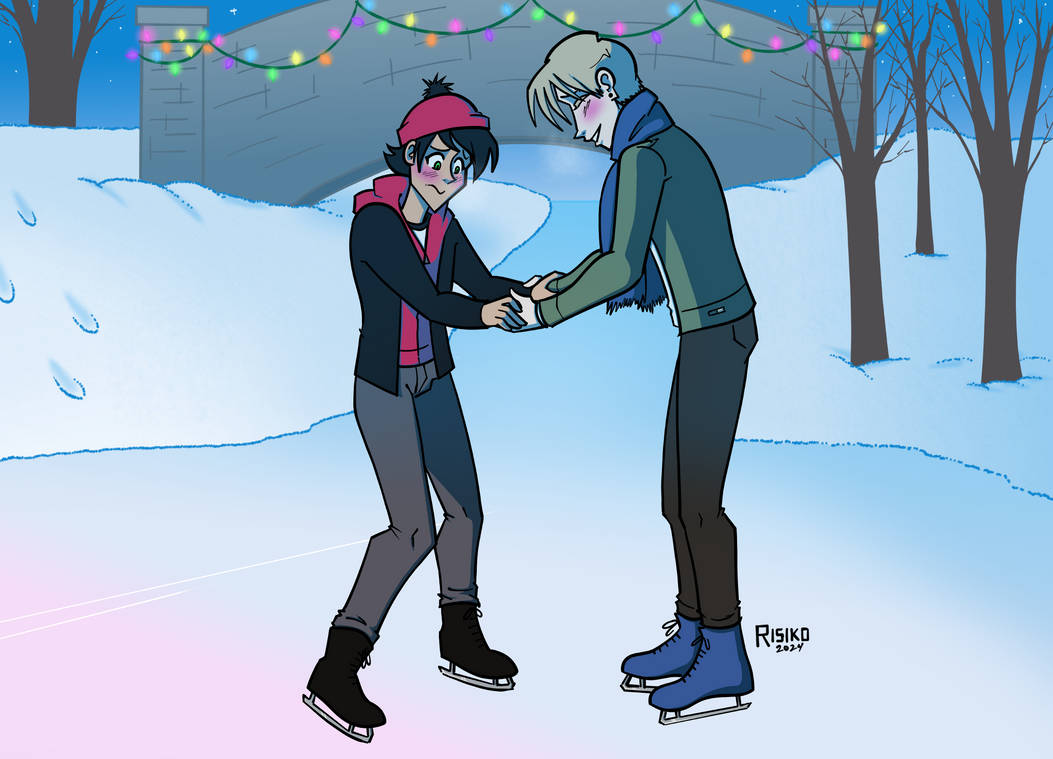
The holidays show up every year with the same script: twinkle lights, sentimental music, and an unspoken expectation that everyone has somewhere warm to land. For a lot of us, being gay during the holidays rewrites that script entirely. The season becomes part celebration, part reckoning. It is where we decorate boldly and grieve quietly, where we build new traditions because the old ones did not have room for us, and where chosen family stops being a cute phrase and becomes the literal reason December feels survivable. This is the queer holiday story nobody puts on a greeting card, and it deserves to be told honestly.
Being gay during the holidays is love and pain in the same breath. It is glamour and grief, glitter and absence, the family you were given and the family you assembled on purpose. It is remembering exactly who showed up for you and who went silent. And underneath all of it is a truth queer people have proven for generations: we are remarkably good at manufacturing light in rooms that were never built to hold us.
It is no secret that gay men treat the holiday season like opening night. We decorate, we coordinate, we curate, we theme. The tree is not just a tree, it is a vision with a color story. The point is not perfectionism for its own sake. The point is permission. The holidays hand us a culturally sanctioned excuse to be extravagant, sentimental, and visible all at once, and we take it.
That instinct usually comes from somewhere tender. A lot of LGBTQ+ people spent their childhoods shrinking, editing themselves at the dinner table, learning which parts to keep quiet so the holidays stayed peaceful. So when we finally get a home of our own, decorating it without apology is not vanity. It is a do-over. We are building the December we wish we had been handed at ten or fifteen, and we are inviting everyone we love into it.
For queer people, holiday decorating is rarely just about aesthetics. It is about identity, about reclaiming a joy that once felt conditional, about turning years of careful survival into something loud and warm and unmistakably ours.
The glitter does not erase the harder truth. For many LGBTQ+ people, the holidays land somewhere between bittersweet and brutal. Some are estranged from the families they were born into. Some are technically still invited home but know they will spend the visit being misgendered, deadnamed, or quietly tolerated rather than embraced. Some scroll past picture-perfect family photos and feel the absence like a draft under the door.
The data backs up what the community already feels. Research from The Trevor Project found that more than one in four LGBTQ+ youth have experienced homelessness or housing instability at some point in their lives, with family rejection identified as a key driving factor. Those young people had two to four times the odds of reporting depression, anxiety, self-harm, and suicidal thoughts compared to peers with stable housing. Family acceptance, in other words, is not a nice-to-have. It is closely tied to whether queer young people stay safe and stay alive.
And this does not magically resolve at adulthood. Plenty of grown, successful, fully self-actualized queer people still feel the floor tilt around the holidays. Estrangement has a long echo. A holiday song in a grocery store, a relative’s name in a group text, the smell of a dish someone’s mother used to make. The loss gets loud precisely when the culture insists everyone should be cozy.
This is exactly why community matters in November and December. It is why we text the friend who got quiet. It is why chosen family is not a backup plan but the main event.
The LGBTQ+ community did not invent chosen family by accident. We built it out of necessity, and we have been doing it for a very long time. The scholar Kath Weston gave the idea its name in her 1991 book Families We Choose, but the practice predates the language. Queer people have always assembled kinship out of friends, mentors, exes, roommates, and the regulars at the same bar, because the families we were born into could not always be trusted to keep us safe.
Nowhere is that clearer than in ballroom culture, where Black and Latino LGBTQ+ people, often pushed out by both their biological families and the mostly white gay mainstream, built “houses” led by chosen mothers and fathers who guided and protected their house children. During the height of the AIDS crisis in the 1980s and 1990s, chosen family went from emotional lifeline to literal one. When biological relatives walked away, it was queer friends and partners who became the caregivers, the advocates, and the mourners, making sure no one faced illness or death alone.
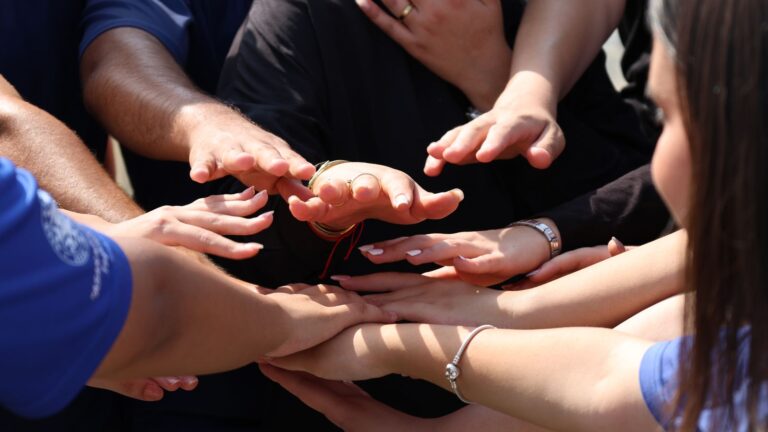
Chosen family is love without a conditions clause. It is the group that becomes your home base, the people who celebrate you rather than merely allow you. And at the holidays, that kind of family becomes something close to sacred.
The beauty of chosen family is that you get to invent the rituals from scratch. A few that consistently carry queer households through the season:
These are not consolation prizes for the people who could not go home. For a lot of us, they are the real holidays, the ones we actually look forward to.
If your season is genuinely joyful this year, that is wonderful and you should soak in every minute. Just stay aware that someone in your orbit might be quietly white-knuckling their way through December. Showing up does not require a grand gesture. It requires attention. A few ways to do it well:
You will rarely know in the moment which message mattered. Send it anyway. The point of community is that you do not have to earn your place in it.
Being gay during the holidays was never only about festive fun. It is also about visibility, and about honoring the queer elders who fought, marched, and in many cases did not survive long enough to celebrate this openly. It is about holding space for everyone still waiting on acceptance that has not arrived yet. It is about building tradition out of truth instead of fear.
Every ornament. Every candle. Every glitter-bombed wreath, every rainbow ribbon, every cocktail night that runs too late. Each one is a small, stubborn reminder that we made it here, that we matter, and that queer people drag light into every room we walk into.
So this season, celebrate with pride and celebrate loudly. Celebrate for yourself. Celebrate for the gay people who cannot go home this year, and for the ones quietly building somewhere new to belong. Celebrate for everyone who came before and made the celebrating possible. The holidays belong to us too, and they always have.
Chosen family refers to the non-biological bonds queer people deliberately build for mutual love and support, often when their families of origin are absent or unsafe. The term was popularized by scholar Kath Weston in her 1991 book Families We Choose, though the practice goes back generations, from ballroom houses to the caregiving networks of the AIDS crisis.
Because the season is built around family togetherness, it can sharpen the pain of estrangement, rejection, or being only partly accepted at home. For many LGBTQ+ people, “going home for the holidays” means deciding whether to hide parts of themselves again, which is why so many build their own celebrations instead.
Invite them in before they have to ask, check in with a simple message, and avoid assuming everyone has a warm place to go. Practical support helps too: donate to LGBTQ+ shelters, share crisis resources, and be openly affirming. Consistency matters more than grand gestures.
Friendsgiving, ugly sweater parties, ornament or wreath crafting nights, multicultural potlucks, and a group chat that stays active all day are all popular. The goal is not to replicate a traditional family holiday but to create rituals that actually fit your chosen family.
The Trevor Project offers free, confidential crisis support for LGBTQ+ young people 24/7 by phone, text, or chat at thetrevorproject.org/get-help. Local LGBTQ+ community centers and chosen-family networks are also valuable, and reaching out to a trusted friend is always a legitimate first step.
Keep reading: why chosen family still matters.
Open relationships, explained without hype or judgment: what ENM and polyamory really mean, the agreements that work, and how to handle jealousy.

Same-sex marriage worldwide in 2026: nearly 40 countries say yes, dozens still criminalize. See where it’s legal, what’s new, and what’s contested.
Situationships, soft launching, breadcrumbing, the talking stage: a witty, accurate guide to modern dating terms through a queer lens. Decode it here.
Demon twinks, haunted hookups and costumes that require zero effort.
Tees from $29.99.