

Non-Monogamy 101: Honest Talk About Open Relationships
Open relationships, explained without hype or judgment: what ENM and polyamory really mean, the agreements that work, and how to handle jealousy.
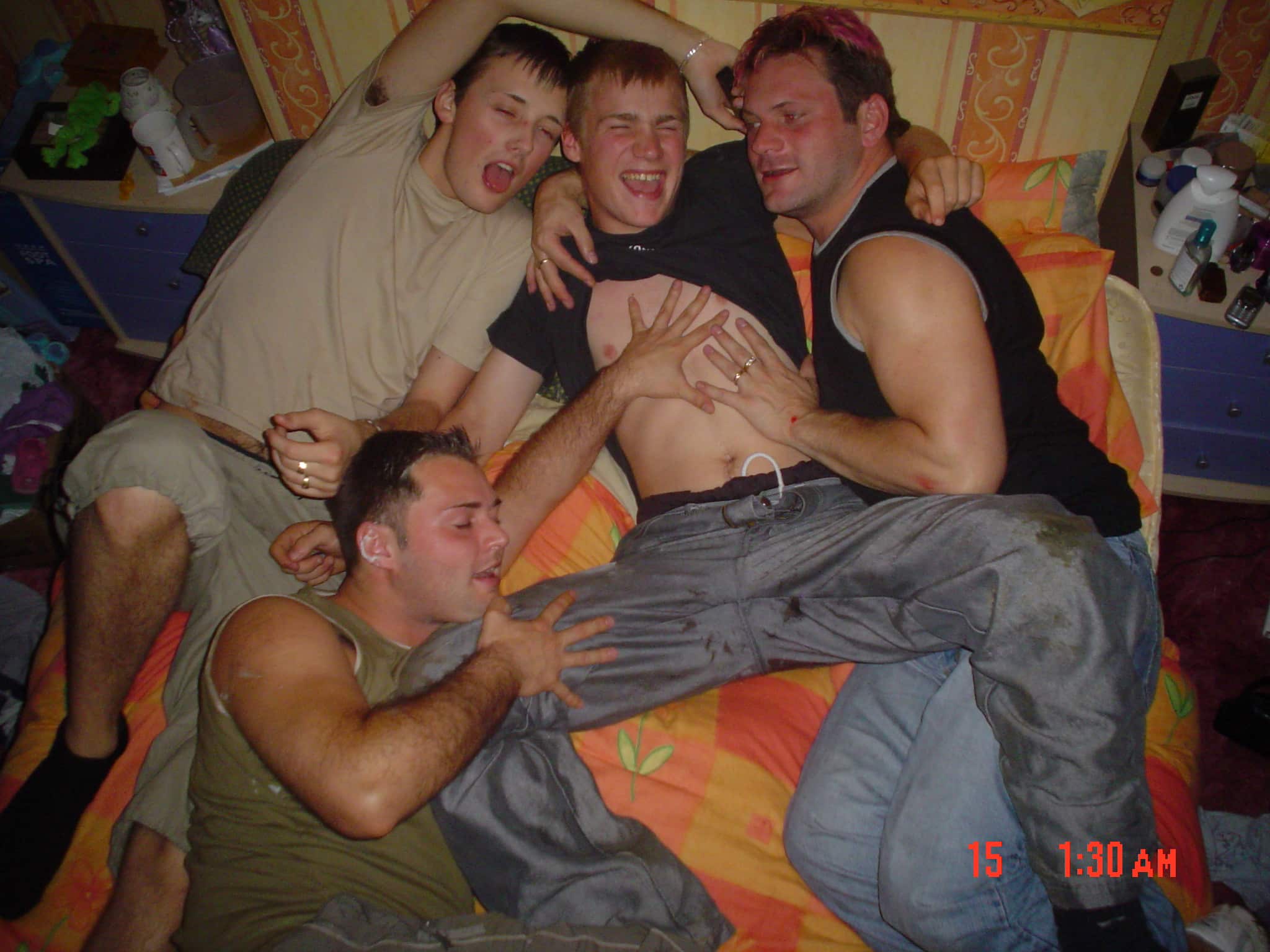
Life in a hookup house is hard to explain to anyone who hasn’t lived it. For a stretch of my twenties, I rented a room in one of these unconventional shared homes, where the rent was cheap, the boundaries were loose, and privacy was treated less like a right than a polite suggestion. It was exhilarating and exhausting in roughly equal measure, like being a cast member on a reality show that nobody bothered to cancel. What follows isn’t a confession or a cautionary tale, exactly. It’s a reflection on what I actually learned standing on the edge of privacy, intimacy, and the strange intimacy of strangers.
The phrase sounds salacious, and sure, the sex was part of it. But the practical reality of a hookup house is closer to a co-living arrangement with the volume turned all the way up. Several people rent rooms in a single property. Some of them barely know each other at the start. The unifying thread isn’t friendship or family but a shared comfort with a more open, fluid approach to connection and sex than most apartments would tolerate. People came and went. Guests came and went more. The front door felt less like a boundary and more like a turnstile.
My particular house had one feature that pushed it past “lively group home” and into genuinely surreal territory: it made money by streaming. Cameras were mounted in nearly every common area and most bedrooms. There was exactly one room without a lens in it, a small space where you kept your documents, your wallet, anything not meant for an audience. You could retreat there, but it was barely larger than a closet, so nobody lingered. The arrangement was disclosed and agreed to up front, which matters, but living it day to day was a different thing entirely from signing off on the idea.
Here is the thing nobody warns you about constant surveillance: it doesn’t make you behave better, it makes you perform. Within a week I’d developed a low hum of self-consciousness that never fully switched off. Picking your nose became unthinkable. Slouching around in old sweatpants doing absolutely nothing felt, absurdly, like a small act of rebellion. Even sleep stopped feeling sacred, because somewhere out there a stranger could be watching me drool into a pillow.
At first the attention was a thrill. There’s an undeniable charge to being seen, to knowing the most ordinary parts of your life have an audience. Psychologists have a name for the shift in behavior that happens when people know they’re being observed; it’s sometimes called the observer effect, and you feel it in your bones in a place like this. Over time, though, the novelty curdled into a quiet kind of fatigue. The version of myself the cameras captured was always slightly edited, slightly braced. Coming home stopped feeling like an exhale. That was the first real lesson: privacy isn’t about having secrets. It’s about having a place where you don’t have to be a version of yourself for anyone.
It would be dishonest to pretend it was all strain. A hookup house has real gifts, and the biggest one is that you are almost never lonely. Loneliness is an epidemic among adults, and especially among queer men who’ve spent years feeling like outsiders. In that house, if you wanted company, company was always down the hall. Want to talk through a bad day? Someone was up. Want to watch a terrible movie at 2 a.m.? Someone would join. And if you wanted something more intimate, well, that was rather the point of the place.
It also widened my world. I met people I would never have crossed paths with otherwise: charming, funny, sharp, sometimes intimidatingly attractive men who, in any normal social setting, I’d have assumed were out of my league. The house had a way of flattening the usual dating hierarchies. Without the careful choreography of apps and first dates, a lot of my own insecurity simply had nowhere to stand. That was genuinely freeing, and it’s a feeling I’ve tried to carry with me since.
For every upside there was a corresponding cost, and most of them traced back to a single problem: boundaries that were always a little too soft. The house often felt like a party that forgot to end. That sounds fun until it’s a weeknight, you have somewhere to be in the morning, and someone is entertaining a guest loudly enough to rattle the walls. Shared space meant shared everything, including the smells and the noise and the aftermath. Some mornings the place smelled like a gym that had given up.
Then there were the moments when boundaries weren’t just blurred, they were gone. I once woke to find a guest I’d never met asleep in my bed, having apparently wandered into the wrong room. I had to gently steer them out, feeling annoyed and, oddly, a little guilty for wanting my own space in a house built around sharing it. That tension never fully resolved. The whole premise of the place was openness, but a person still needs, sometimes, to simply sleep alone and be no one’s option for a night.
Close quarters plus fluid relationships equals drama, reliably. Connections in the house were casual by design, but feelings refused to read the memo. Jealousy flared. Alliances shifted week to week. There were nights when arguments echoed down the hall over something as petty as who had the “right” to bring a guest into the shared living room. It was high school all over again, except with adult consequences and far fewer filters. Some of the friction was funny in hindsight. Some of it taught me, the hard way, that “no strings attached” is a setting two people have to actually agree on, not a default you can assume.
Daily life produced stories I still tell. There was the housemate who decided to cook dinner for everyone, got pleasantly distracted by a guest partway through, and left the stove going. We came home to a smoking pan and a burnt smell that haunted the kitchen for days. There was the visitor so memorably loud that the entire house heard the whole encounter, and who emerged the next morning to a round of unironic applause from everyone at the breakfast table. In moments like that there was a real camaraderie, the sense that we were all in on the same ridiculous, slightly feral joke.
But the moments that stayed with me weren’t the loud ones. I remember sitting on the couch with a housemate after a brutal week, both of us wrung out. We didn’t hook up that night. We just talked, honestly, about our lives and our insecurities and the winding roads that had landed us in such an unusual place. It cut straight through the usual theatrics. Underneath all the noise and performance, most people there were searching for the same thing anyone is: to be seen, accepted, and wanted, even briefly, exactly as they were.
Living in a hookup house was like stepping into a parallel universe, one that ran on its own physics. It was messy, funny, occasionally lonely in a crowd, and completely unlike anything I’d known. It taught me about connection in both its forms: the kind that sparks in an instant and the rarer kind that builds slowly over shared exhaustion on a couch at 3 a.m. Most of all, it taught me about boundaries. I learned to name what I needed and to defend it, even in a place practically designed to ignore the concept. Ironically, the house with the fewest boundaries is where I finally learned to draw my own.
Would I do it again? Almost certainly not. The noise, the lack of privacy, and the endless low-grade drama eventually outweighed the rest. But for that particular chapter, it was exactly what I needed: a whirlwind of connection, chaos, and self-discovery that I had to live through to understand. I wouldn’t recommend it as a permanent way of life, and I wouldn’t trade the memories for anything either. The edge of privacy is an uncomfortable place to stand. It’s also, it turns out, a remarkably clear vantage point for figuring out who you are when you think no one is watching, and who you become when you know they are.
It’s a shared living arrangement, usually a single house with several rented rooms, where the residents share a comfortable, open approach to casual sex and frequent guests. Think co-living with far looser social rules. Some, like the one I lived in, add another layer such as streaming or recording, but most are simply group homes built around an unusually open lifestyle.
Carefully, and never as well as you’d like. The honest answer is that privacy becomes a thing you have to actively claim rather than assume. Clear house rules help, a door that locks helps more, and any camera or recording setup should be fully disclosed and consented to by everyone, with off-limits spaces clearly defined. My biggest takeaway was that you have to advocate for your own space out loud, because no one will protect it for you.
It can be, with the same precautions any sexually active adult should take and a few extra. That means honest conversations about sexual health and regular testing, clear consent every time, and a sober read on who’s actually coming through the door. Health organizations like the CDC offer solid, judgment-free guidance on STI prevention and testing that’s worth knowing regardless of where you live.
For a lot of reasons that have little to do with sex. Cheap rent, built-in company, freedom from judgment, and a sense of belonging are powerful draws, especially for people who’ve felt isolated elsewhere. Loneliness is a genuine public health concern, and a house full of people who accept you, flaws and all, can be a real, if temporary, antidote.
Not as a long-term plan, no. But I’d never tell someone they were wrong for trying it. For the right person at the right moment, a hookup house can be a fast, intense education in connection and self-knowledge. Just go in with open eyes, firm boundaries, and the understanding that you’ll probably want to leave before you think you will.
Submitted by Ty Parker.
Keep reading: the new grammar of queer dating.

Open relationships, explained without hype or judgment: what ENM and polyamory really mean, the agreements that work, and how to handle jealousy.

Same-sex marriage worldwide in 2026: nearly 40 countries say yes, dozens still criminalize. See where it’s legal, what’s new, and what’s contested.

Situationships, soft launching, breadcrumbing, the talking stage: a witty, accurate guide to modern dating terms through a queer lens. Decode it here.
Demon twinks, haunted hookups and costumes that require zero effort.
Tees from $29.99.